Tracking the Elusive Snow Leopard in the Himalayas
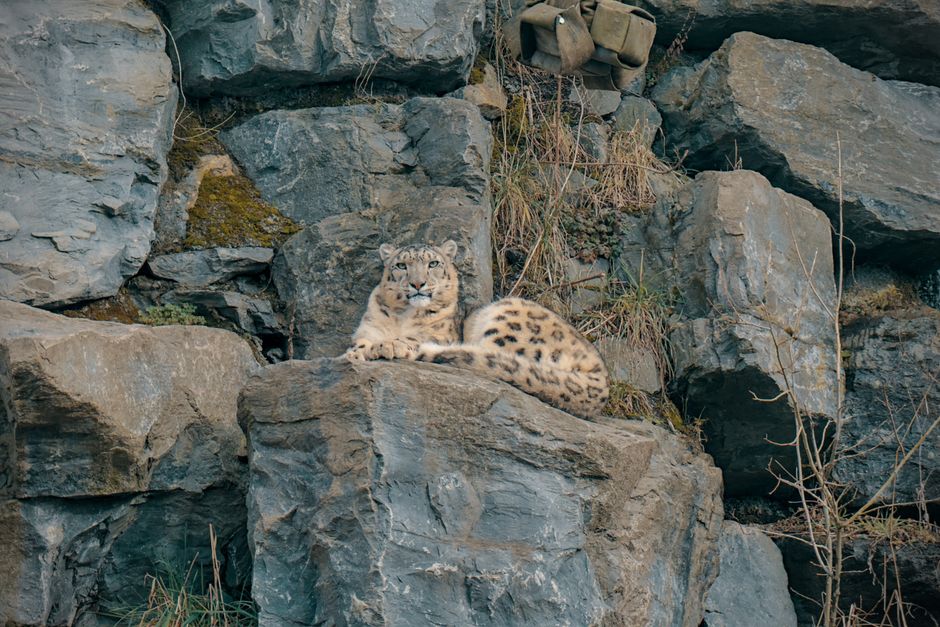
The snow leopard, often called the ghost of the mountains, inhabits some of the most remote and rugged terrain on Earth. Stretching across twelve countries in Central and South Asia, these big cats are notoriously difficult to observe in the wild. Their pale, spotted coats blend seamlessly into the rocky slopes, and their solitary, crepuscular habits make direct sightings rare. For researchers seeking to understand population dynamics, movement patterns, and behavioral ecology, conventional visual surveys are largely ineffective. This has driven the development and refinement of non‑invasive and minimally intrusive monitoring techniques that allow scientists to gather data without disturbing the animals or their habitat.
Among the most widely adopted tools are camera traps and GPS collars. Each technology provides different insights, and when used together, they offer a layered understanding of snow leopard ecology. Camera traps capture photographic evidence of presence, activity patterns, and even individual identification based on unique coat patterns. GPS collars, attached to a limited number of individuals, provide continuous location data that reveals home range sizes, movement corridors, and habitat use. The combination of these methods has transformed snow leopard research from anecdotal field notes to data‑driven science, though each approach comes with its own logistical and ethical considerations.
This article examines the practical methodologies behind camera trapping and GPS collaring in the Himalayas, the kinds of behavioral data they generate, and how researchers use that information to inform broader conservation strategies. The focus is on the process itself—the planning, deployment, data collection, and analysis—rather than on definitive outcomes, because every season and every landscape presents unique variables that shape what can be learned.
Camera Traps: Capturing the Unseen
Camera traps are automated cameras triggered by motion or heat sensors. In the context of snow leopard research, they are typically placed along ridgelines, cliff bases, and narrow valleys where the cats are known to travel or scent‑mark. The placement strategy is critical: cameras must be positioned at an appropriate height and angle to capture the entire body of the animal, especially the tail and flanks, where individual spot patterns are most distinctive. Researchers often use multiple cameras per site to increase capture probability and reduce the chance of missing an individual moving quickly through the frame.
Setting up a camera trap network in the Himalayas involves months of preparation. Teams must secure permits from national park authorities, train local field assistants, and transport equipment over difficult terrain. Batteries and memory cards need to be replaced every few weeks, a task that can require multi‑day treks at altitudes above 4,000 meters. Weather is a constant challenge: snow can cover the camera lens, extreme cold can drain batteries, and humidity can fog the sensor. Despite these obstacles, well‑maintained camera arrays can operate for years, producing thousands of images that are later analyzed to estimate population density and occupancy.
Individual identification relies on the unique rosette pattern on each snow leopard’s coat, much like a human fingerprint. Software such as Wild.ID or pattern‑matching algorithms help researchers compare images across seasons and sites. However, the process is time‑consuming and requires careful quality control. Not every image is usable; poor lighting, partial frames, or an animal moving too quickly can prevent identification. Researchers typically calculate capture‑recapture models, which estimate population size based on the frequency of capturing the same individual over time. These models assume that the population is closed—meaning no births, deaths, or migrations during the sampling period—which is often an approximation in the dynamic Himalayan ecosystem.
GPS Collars: Following the Ghosts
GPS collars provide a different kind of data: precise, time‑stamped locations that reveal where a snow leopard goes, how far it travels, and which habitats it uses. Collaring a snow leopard is an elaborate operation that requires capturing the animal, usually with padded foot‑hold traps or cage traps placed near scent‑marking sites. The capture must be conducted by experienced veterinarians and wildlife biologists, with strict protocols to minimize stress and injury. Once the animal is sedated, the collar is fitted, and basic health measurements—weight, age estimate, and body condition—are recorded.
Modern GPS collars are designed to be lightweight and programmable. They can be set to record locations at intervals ranging from every few minutes to every few hours, depending on the research question and battery life. Many collars also include accelerometers that detect movement patterns, allowing researchers to distinguish between resting, walking, running, or feeding behaviors. The collars are equipped with a release mechanism that drops off after a predetermined period, typically between six months and two years, to avoid long‑term burden on the animal.
Data from the collars is either stored onboard and downloaded after retrieval or transmitted via satellite or mobile networks. In the Himalayas, satellite transmission is often the only option because cellular coverage is sparse. The collar sends regular position updates, which researchers can monitor remotely to track movements in near real time. This capability has led to unexpected discoveries, such as snow leopards crossing high passes that were previously thought impassable, or using different seasonal ranges far apart from each other. However, the number of collared individuals is always small—usually fewer than ten in a given study area—so the data represents individual stories rather than a full population picture.
Combining GPS collar data with camera trap results allows researchers to contextualize what they observe. For instance, if a camera trap captures a male snow leopard at a certain location, the collar data from that same individual can show what path it took to get there and how long it stayed. This integrated approach helps reduce the biases inherent in each method alone: camera traps only record presence at a fixed point, while collars provide continuous movement but only for a select few animals.
Behavioral Insights from the Field
The data collected through these technologies has gradually built a more nuanced understanding of snow leopard behavior. For example, camera trap sequences have revealed that snow leopards often travel along specific ridgelines and use prominent rocks as scent‑posting sites. These behaviors are not random; they likely serve to maximize visibility while minimizing energy expenditure in a landscape where prey is scarce and widely dispersed. GPS collar data corroborates this by showing home ranges that can span hundreds of square kilometers, with individuals travelling several kilometers in a single night.
Seasonal movements also become visible through long‑term monitoring. Some snow leopards descend to lower elevations in winter when snow is deep at higher altitudes, while others remain in the same area year‑round. These variations may depend on the availability of prey species such as blue sheep and ibex, which themselves move seasonally. By correlating snow leopard locations with environmental variables like snow cover, vegetation index, and prey density, researchers can develop predictive models of habitat suitability. Such models are not predictions of where snow leopards will appear in the future—they are descriptions of observed associations that can guide further investigation.
Social interactions are another area where camera traps have provided rare glimpses. Images of multiple snow leopards together—usually a mother with cubs, but occasionally adult pairs—suggest that the species may have more complex social structures than previously assumed. Mating behavior, cub rearing, and territorial disputes are rarely captured, but when they are, they offer valuable clues about reproduction and survival. The challenge is that such observations are opportunistic and cannot be replicated on demand; each image is a piece of a much larger puzzle.
Conservation Applications and Limitations
The information gathered from camera traps and GPS collars feeds directly into conservation planning. For instance, identifying movement corridors allows conservation organizations to prioritize habitat connectivity and to work with local communities to mitigate human‑wildlife conflict. Data on livestock depredation events—when a snow leopard takes a domestic animal—can be cross‑referenced with collar locations to understand the circumstances that lead to such incidents. This helps in designing compensation programs or predator‑proof corrals that reduce retaliation killings.
However, it is important to recognize the limitations of these methods. Camera traps and collars only cover small portions of the snow leopard’s vast range, and the results from one region may not apply to another. Environmental conditions, prey availability, and human pressure vary greatly across the Himalayas. Moreover, the presence of researchers and equipment can itself alter animal behavior, even if every effort is made to minimize disturbance. For these reasons, conclusions drawn from monitoring data are always tentative and context‑dependent. They are most valuable when treated as part of an adaptive management cycle, where hypotheses are tested and methods refined over time.
Organizations such as Wild Frontier have been instrumental in deploying these technologies across multiple sites while also training local wildlife staff to continue monitoring independently. The long‑term goal is not simply to count snow leopards but to build a sustained understanding of how these animals respond to a changing environment, including climate shifts and increasing human footprint. The process of tracking the elusive snow leopard is itself a slow, methodical, and iterative journey—one that mirrors the careful patience required to catch a glimpse of the ghost of the mountains.